The ActiveCampaign Lead Scoring System is one of the most powerful tools you can use to improve your sales process—but most people get it completely wrong.
A common mistake is assigning random points to random actions. Someone opens a few emails, clicks a link, downloads a resource—and suddenly they look like a “hot lead.” But after a few weeks, nearly every contact ends up with a high score. The result? Your sales team stops trusting the data.
In this guide, you’ll learn a simple, structured, and highly effective lead scoring framework that actually reflects who is ready to buy—and who isn’t.
Why Most ActiveCampaign Lead Scoring Systems Fail
Most scoring systems fail because they combine everything into one single score without context.
If a lead has 85 points, what does that mean?
- Are they a perfect fit for your business?
- Are they highly engaged?
- Or are they actively looking to buy right now?
Without clarity, your scoring becomes meaningless.
The solution is to separate your scoring into three distinct categories.
The 3-Part ActiveCampaign Lead Scoring System
1. Fit Score (Who They Are)
The Fit Score evaluates how well a lead matches your ideal customer profile.
This has nothing to do with behavior—it’s about identity and qualification.
You can assign points based on:
- Company size
- Industry
- Location
- Job title (Founder, CEO, Marketing Director, etc.)
You should also subtract points for poor-fit leads, such as:
- Students
- Competitors
- Job seekers
- Out-of-market contacts
This ensures your sales team focuses only on high-quality prospects.
2. Engagement Score (What They Do)
The Engagement Score tracks how actively a lead interacts with your brand.
However, not all engagement signals are equal.
Avoid relying heavily on email opens—they’re no longer reliable due to privacy changes.
Instead, prioritize:
- Link clicks
- Website visits
- Form submissions
- Webinar registrations
- Replies to emails
- Visits to key pages (pricing, demo, etc.)
Use Expiration to Keep Scores Accurate
One of the most important aspects of an effective ActiveCampaign Lead Scoring System is score decay.
If someone was active months ago but hasn’t engaged since, they should not still appear as a hot lead.
Best practice:
- Set engagement points to expire within 30 to 90 days, depending on your sales cycle.
This keeps your pipeline fresh and relevant.
3. Buying Intent Score (Ready to Purchase Signals)
The Buying Intent Score is where things get serious.
This tracks behaviors that typically happen right before a purchase decision.
Examples include:
- Visiting the pricing page multiple times
- Booking a demo
- Starting a free trial
- Replying to a sales email
- Visiting comparison pages
- Downloading proposals
These actions should carry higher point values because they signal real intent.
Using Automations to Improve Scoring Accuracy
For repeated behaviors (like multiple visits or clicks), don’t rely only on static rules.
Instead, use automations that trigger every time the action occurs.
Examples:
- +5 points every time someone visits the pricing page
- +3 points for each important email click
Make sure your automations are configured to run multiple times.
This creates a dynamic and responsive scoring system.
Don’t Forget Negative Scoring
A high-performing ActiveCampaign Lead Scoring System doesn’t just add points—it subtracts them too.
This prevents outdated or disengaged leads from cluttering your pipeline.
Examples:
- -10 points for 30 days of inactivity
- -20 points for unsubscribing
- -15 points for no website visits
- -25 points for stalled deals
Negative scoring ensures your data reflects reality.
Setting Lead Score Thresholds
Once your scoring model is in place, define clear thresholds:
- 0–20 points: Cold Lead
- 21–50 points: Warm Lead
- 51–80 points: Marketing Qualified Lead (MQL)
- 81+ points: Sales Qualified Lead (SQL)
These thresholds allow you to trigger automations like:
- Creating deals automatically
- Assigning leads to sales reps
- Sending internal notifications
This is where scoring directly impacts revenue.
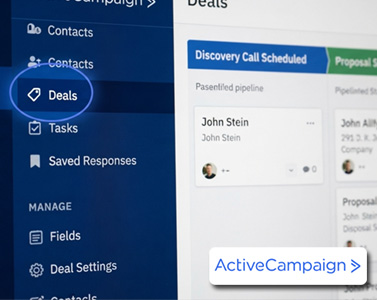
Using Deal Scoring Inside the CRM
After a lead enters your pipeline, you can apply Deal Scoring.
This helps prioritize opportunities based on sales activity.
You can add points for:
- Moving to advanced pipeline stages
- Email replies
- Proposal views
And subtract points when:
- Deals remain stagnant too long
This helps sales teams focus on the most promising opportunities.
Keep Your Lead Scoring System Simple
The most effective ActiveCampaign Lead Scoring System is not the most complex one.
It’s the one your team actually trusts and uses daily.
Start with:
- A small number of meaningful signals
- Clear scoring categories
- Regular monthly reviews
Then refine based on real customer behavior.
Final Thoughts
A well-designed ActiveCampaign Lead Scoring System transforms your marketing and sales alignment.
Instead of guessing who is ready to buy, your team can act with confidence—focusing only on leads that truly matter.
If your current scoring system feels unreliable, confusing, or ignored by your sales team, it’s time to simplify and restructure using this framework.